
Adding an A record or CNAME record on Bluehost is a straightforward process that takes around 5 to 10 minutes. You will need to do this whenever you connect a third-party service to your domain, verify domain ownership, or point a subdomain to a specific server. If you have not made the subdomain yet, first learn how to create a subdomain in Bluehost. Both the Bluerock and Legacy control panels give you access to DNS management, and the steps differ slightly between them.
A Record vs CNAME: Which Do You Need?
Before adding a DNS record, it helps to know which type you actually need.
An A record (Address record) maps a domain or subdomain directly to an IP address. For example, if your server’s IP address is 123.456.789.0, you would create an A record pointing your domain to that IP. A records are used for your root domain (yourdomain.com) and for subdomains that need to point to a specific IP.
A CNAME record (Canonical Name record) maps a subdomain to another hostname rather than an IP address. For example, you might create a CNAME for mail.yourdomain.com that points to the hostname of your email provider. CNAME records cannot be used on your root domain (bare domain), only on subdomains. Google Workspace, Mailchimp, Shopify, and many other services will give you a CNAME value to add during setup.
In short: use an A record when you have an IP address to point to; use a CNAME when you have a hostname to point to. Use an A record for root domains and a CNAME for subdomains.
If you also need to update your nameservers, see our guide on how to change nameservers on Bluehost. For a broader overview of Bluehost domain management including email DNS, see the Bluehost domain and DNS guide.
Add a CNAME Record on Bluehost (Bluerock)
These instructions apply if your account uses the Bluerock interface.
Step 1 - Log In
Log into your Bluehost account at my.bluehost.com and access the control panel.
Step 2 - Domains
On the left-hand menu, click the Domains tab. This will show a list of all the domains registered or connected to your Bluehost account. If you need to add a new domain to Bluehost first, do that before creating DNS records.
Step 3 - Manage
Click the Manage button next to the domain you want to edit. From the dropdown menu, select DNS.
Step 4 - DNS Manager
Scroll down to the DNS Manager section and locate the CNAME (Alias) records area. Click the Add Record button and fill in the following fields:
- Host Record - The subdomain you want to use (for example, enter
mailto create mail.yourdomain.com) - Points to Value - The hostname provided by the third-party service
- TTL - Leave at the default value (usually 14400 or Auto)
Click Save to add the CNAME record.
Add an A Record on Bluehost (Bluerock)
If you need to point a domain or subdomain to an IP address rather than a hostname, add an A record instead.
Step 1 - Log In
Log into your Bluehost account and go to the control panel.
Step 2 - Domains
Click the Domains tab in the left-hand navigation menu.
Step 3 - Manage
Click Manage next to the relevant domain, then choose DNS from the dropdown.
Step 4 - A (Host) Records
Scroll down to the A (Host) records section. Click Add Record and complete the fields:
- Host Record - Enter the subdomain (or leave blank or enter
@to point the root domain) - Points to Value - Enter the IP address you are pointing the domain to
- TTL - Leave at the default (14400 seconds is standard)
Click Save. The new A record will appear in the list immediately, though it will take time to propagate across the internet.
Add a CNAME Record on Bluehost (Legacy)
If you are using the Legacy cPanel interface, follow these steps to add a CNAME.
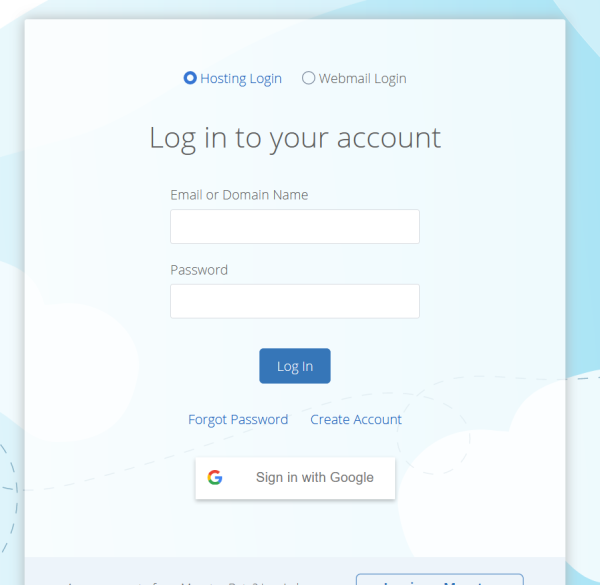
Step 1 - Log In
Log into your Bluehost account.
Step 2 - Domains
From the cPanel dashboard, click Domains in the navigation menu, then click Zone Editor. A new page will load with your DNS records.
Step 3 - Root Domain
Select your root domain from the dropdown menu at the top of the Zone Editor.
Step 4 - Add DNS Record
Click the Add Record button and fill in the following:
- Host Record - The subdomain you want to point (for example,
wwwormail) - TTL - Leave at the default value
- Type - Select CNAME from the dropdown
- Points to Value - Enter the CNAME hostname provided to you
Click Add Record to save.
Add an A Record on Bluehost (Legacy)
To add an A record on the Legacy cPanel, the process is almost identical to adding a CNAME, with one key difference in the record type selection.
Step 1 - Log In
Log into your Bluehost control panel and open cPanel.
Step 2 - Zone Editor
Click Domains from the navigation, then click Zone Editor.
Step 3 - Root Domain
Select the domain you want to edit from the dropdown.
Step 4 - Add DNS Record
Click Add Record and fill in the following fields:
- Host Record - Enter the subdomain or
@for the root domain - TTL - Leave at the default
- Type - Select A from the dropdown
- Points to Value - Enter the IP address
Click Add Record to save the entry.
How Long Do Bluehost DNS Changes Take?
Once you save a new DNS record in Bluehost, it is added to Bluehost’s own name servers immediately. However, DNS changes need to propagate across the internet’s global network of DNS resolvers before everyone can see them.
In practice, most DNS changes take effect within 1 to 4 hours. The standard upper limit for full propagation is 48 hours, though it is rare to take that long when Bluehost is your DNS provider.
A few factors that affect propagation speed:
- TTL value: A lower TTL (Time to Live) means DNS resolvers cache the old record for a shorter time before checking for updates. The default TTL on Bluehost is typically 14400 seconds (4 hours). If you know you are about to make a change, lowering the TTL in advance can speed up propagation.
- Your ISP’s DNS cache: Your internet provider’s DNS resolver may hold the old record for a while even after the rest of the world has updated. Clearing your local DNS cache can help you see the updated record sooner.
- Record type: A records and CNAME records both propagate at roughly the same speed. MX records (for email) sometimes take longer.
You can check propagation status using a free tool like whatsmydns.net, which lets you see whether a DNS record has updated across different locations around the world.
Final Word: How to Add an A Record and CNAME on Bluehost
Adding DNS records on Bluehost is a quick process once you know which record type you need and where to find the DNS manager. Use an A record when pointing to an IP address and a CNAME when pointing to a hostname. Remember that DNS changes can take up to 48 hours to fully propagate, even if Bluehost shows the record as saved. If you have any trouble, Bluehost’s support team can assist. You can also manage your full domain setup through your Bluehost account at any time.