
You can cancel Bluehost at any time. If you are within the first 30 days of your hosting plan, you qualify for a full refund on the hosting cost. Outside of 30 days, you can stop your hosting from renewing at the end of the current term, Bluehost does not offer mid-term refunds after the 30-day window. Either way, your domain registration is separate and is not refunded.
Before You Cancel: Export Your Data
Before contacting Bluehost or turning off auto-renewal, make sure you have copies of everything you need:
- Website files: download via File Manager in cPanel or by SFTP client
- Database: export via phpMyAdmin in cPanel (export as .sql)
- Emails: download any emails you want to keep from your mail client or webmail
- Domain nameservers: note your current DNS settings if you plan to move the domain to another registrar or hosting provider. If you are switching to a host that offers free migration, they may handle the file transfer for you
Once the account is cancelled and the grace period ends, all files are deleted. Bluehost does not provide data recovery after cancellation.
Cancelling Within 30 Days (Full Refund)
If you are within the first 30 days of your plan, you must contact Bluehost directly to cancel and claim the refund, you cannot do this through the dashboard alone. Have these details ready before contacting support:
- The last four characters of your Bluehost password
- The email address on the account (visible under Profile)
If you need to update or retrieve your password before cancelling, see the guide on how to change your Bluehost cPanel password.
Contact Bluehost via live chat (available 24/7 at bluehost.com) or phone (US toll-free). Ask the support team to cancel your account and process the refund. The refund typically appears on your original payment method within 3-5 business days.
Bluehost Refund Policy
The 30-day money-back guarantee applies to hosting plan costs only. The following are not refunded:
- Domain registration fees (the free domain you claimed on signup)
- Add-ons such as SiteLock, CodeGuard, or paid SSL certificates
- Domains purchased separately at any time
After 30 days, there are no prorated refunds, the remaining hosting term is forfeited when you cancel.
Stopping Auto-Renewal (End-of-Term Cancellation) in Bluerock
If you are past 30 days and want to stop your hosting from renewing, use the Bluerock dashboard:
Step 1 - Log In
Log into your Bluehost control panel with your current credentials.
Step 2 - Account
Click the Account icon in the top-right corner of the screen.
Step 3 - Products
Select Products from the dropdown menu. You will see your active hosting plan listed here.
Step 4 - Do Not Renew
Click the Renew button next to your hosting account. From the options shown, select Do Not Renew. Optionally, leave feedback for Bluehost, then click Continue to confirm. Your hosting will remain active until the end of the paid term and will not renew after that date.
Stopping Auto-Renewal in Legacy
If you are on the Legacy interface, the steps differ slightly:
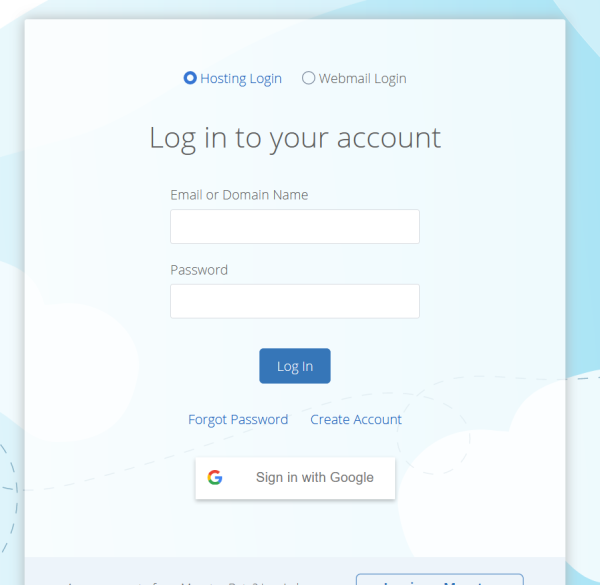
Step 1 - Log In
Log into your Bluehost control panel.
Step 2 - Account
Click on the Account option in the navigation.
Step 3 - Do Not Renew
Click the Renew tab, then select the Do Not Renew radio button next to your hosting product. Choose a reason and click Continue to confirm.
How to Transfer Your Domain Away From Bluehost
Your domain is registered separately from your hosting, so cancelling hosting does not move or delete it. If you want to manage the domain at a different registrar (Namecheap, GoDaddy, Cloudflare Registrar, etc.), transfer it before the hosting expires so you are not rushed.
Step 1 - Disable Domain Lock
Domains have a transfer lock enabled by default to prevent unauthorized moves. In Bluehost, go to Domains (in the top navigation), find the domain you want to transfer, and look for the Transfer Lock or Registrar Lock setting. Turn it off.
Step 2 - Get the EPP Authorization Code
An EPP code (also called an auth code or transfer code) authorizes the transfer at the registry level. In Bluehost domain management, look for Get EPP Code or Authorization Code next to the domain. Bluehost will email it to the address on the account. This code is typically valid for a limited time (usually 7-30 days).
Step 3 - Initiate the Transfer at the New Registrar
Go to the registrar you are transferring to, find their domain transfer page, and enter your domain name and EPP code. The new registrar handles the rest. The transfer typically completes within 5-7 days. You will receive confirmation emails at each stage.
Step 4 - Update Nameservers After Transfer
Once the transfer completes, update the domain’s nameservers at the new registrar to point to your new hosting provider. If you have already set up hosting elsewhere and exported your DNS records, this is the final step to make the new site go live.
Note: ICANN rules prevent domain transfers within 60 days of a new registration or a previous transfer. If your domain was registered recently, you may need to wait before it can be moved.
Cancelling Bluehost Add-Ons
Bluehost add-ons (SiteLock, CodeGuard, Microsoft 365, paid SSL certificates) renew independently of the hosting plan. Cancelling your hosting plan does not automatically stop them. Review every active add-on before you cancel hosting.
To cancel an add-on, log in to Bluehost and go to Account > My Products (or Renewals & Billing depending on your interface). Find the add-on subscription you want to cancel and select Do Not Renew or Cancel next to it. Confirm the cancellation.
Key things to know about each common add-on:
- SiteLock Security: Billed separately. Must be cancelled through My Products independently of your hosting plan.
- CodeGuard Basic: Same as SiteLock. A separate subscription requiring its own cancellation step.
- Microsoft 365 email: Continues independently after hosting cancellation. Cancel through the Microsoft 365 section of your Bluehost account or directly through Microsoft.
- Domain Privacy Protection: Tied to the domain registration, not the hosting plan. It continues until the domain renewal date. If you keep the domain at Bluehost after cancelling hosting, privacy protection billing continues.
- Domain registration itself: Your domain continues to be billed annually regardless of hosting status. Transfer it or let it expire once you no longer need Bluehost to manage it.
Add-ons are not refunded after purchase. Cancelling stops the next charge but does not refund the current period. If an add-on is bundled into your plan price, it cannot be removed independently. Cancel the plan to remove it along with everything else.
Deleting Your Bluehost Account vs Cancelling
Cancelling your Bluehost hosting stops billing and takes the hosting offline when the term ends. Your Bluehost account itself (the login, profile, and any domains still registered there) continues to exist after cancellation, you can still log in and manage domains or any other active products.
If you want to delete the account entirely (remove your personal data and close the account permanently), this is a separate request. Contact Bluehost support directly via live chat or phone and ask to close and delete your account. Under data protection regulations, they are obliged to process this request for EU and UK residents (GDPR) and California residents (CCPA).
Before requesting deletion, confirm that:
- All domains you want to keep have been transferred to another registrar
- You have exported all data (files, databases, emails)
- Any remaining billing disputes are resolved
What Happens to Your Domain After Cancellation?
Your domain registration is independent of your hosting. When your hosting is cancelled:
- The domain remains registered in your name until its own renewal date
- You can transfer the domain to another registrar at any time
- The free domain included at signup is registered for one year; if you cancel hosting before the year is up, Bluehost will deduct the domain cost from any refund (since the domain was included at no charge)
What to Use Instead of Bluehost
If you are cancelling Bluehost to move to a different host, here are the most common replacements and what each is best suited for.
Hostinger
The closest like-for-like replacement at a similar price point. Hostinger’s shared plans start under $3 per month and the hPanel control panel is straightforward for anyone coming from Bluehost’s cPanel setup. One-click WordPress install, free migration, and free domain for the first year are all included. Performance on Hostinger has improved significantly and it is a strong choice for most beginner-to-intermediate WordPress sites. See our Hostinger review for a full breakdown.
SiteGround
SiteGround offers free migration for one site, fully managed WordPress updates, and better default caching than Bluehost. Entry pricing is slightly higher at ~$3.99 per month (promotional rate) but renewal prices are more predictable than Bluehost’s steep renewal jumps. A good choice if you want more managed features without paying for a premium managed host.
Cloudways
If you are leaving Bluehost because your site is outgrowing shared hosting, Cloudways is the natural next step. Plans start at $11 per month on DigitalOcean with no overselling, no CPU throttling, and the ability to scale server resources without migrating your files. The platform manages Nginx, PHP, and database configuration for you. See our Cloudways review for what to expect on performance and pricing.
Bluehost Cancellation Policy Summary
- 30-day money-back guarantee: Full refund on hosting fees within the first 30 days. Domain registration fees are excluded and non-refundable.
- After 30 days: No partial refund for unused months. You can stop the plan from renewing, but the current term runs to its end date.
- How to cancel within 30 days: Contact Bluehost support via live chat or phone. You cannot complete a refund cancellation through the dashboard alone.
- How to cancel after 30 days: Set hosting to Do Not Renew through Account > Products in the dashboard. No phone call needed.
- Domain retention: Your domain stays registered until it expires, even after hosting is cancelled. Transfer it before or immediately after cancellation.
- Data deletion: Files are deleted after the account grace period ends. Export everything before cancelling.
Final Word: How Do I Cancel Bluehost?
Cancelling Bluehost within 30 days means contacting support directly for the full refund. After 30 days, set your hosting to Do Not Renew through the dashboard and your account will stay active until the current term ends. Export your files and database before the account closes, data is deleted and cannot be recovered after cancellation. Transfer your domain to another registrar before or immediately after cancellation so you retain control of it. If you want to remove your data entirely, request full account deletion from Bluehost support. If you decide to stay on Bluehost, you may want to update your Bluehost cPanel password and enable two-factor authentication to secure the account.