
You can change the nameservers on a Bluehost-registered domain to point it to a different web host, or reset them back to Bluehost’s defaults to bring hosting back. This guide covers the steps for both the Bluerock and Legacy control panels, explains when to change nameservers vs. editing DNS records, and includes Bluehost’s default nameserver values.
Bluehost Default Nameservers
If you need to point a domain back to Bluehost hosting, use these default nameservers:
ns1.bluehost.comns2.bluehost.com
Enter these as the nameserver values when using the Custom Nameservers option, or select the “Use Default Nameservers” toggle if your domain is already registered through Bluehost. For a broader look at how Bluehost handles domains and DNS, including A and CNAME records and email authentication, see the Bluehost domain and DNS guide.
Nameservers vs. DNS Records: Which Should You Change?
Changing nameservers transfers DNS control entirely to the new host - the new host manages all DNS records from that point. Editing individual A records or CNAMEs leaves DNS management on Bluehost while pointing specific services (like a subdomain) elsewhere.
If you are moving your entire site to a new host, change the nameservers. If you only need to point one subdomain or service to another provider while keeping email and other Bluehost services intact, editing individual DNS records is usually the better approach.
How to Change Nameservers in Bluerock
Step 1 - Log In
Log into your Bluehost account using your credentials.
Step 2 - Domains
In the left-hand sidebar, click Domains.
Step 3 - Select Your Domain
Find the domain you want to update. Click the down arrow next to the Manage button and select DNS from the dropdown menu.
Step 4 - Edit Nameservers
Scroll to the Nameservers section and click Edit. Under Setup Type, select the Custom Nameservers toggle. Enter the nameservers for your new host, then click Save.
How to Change Nameservers in Legacy
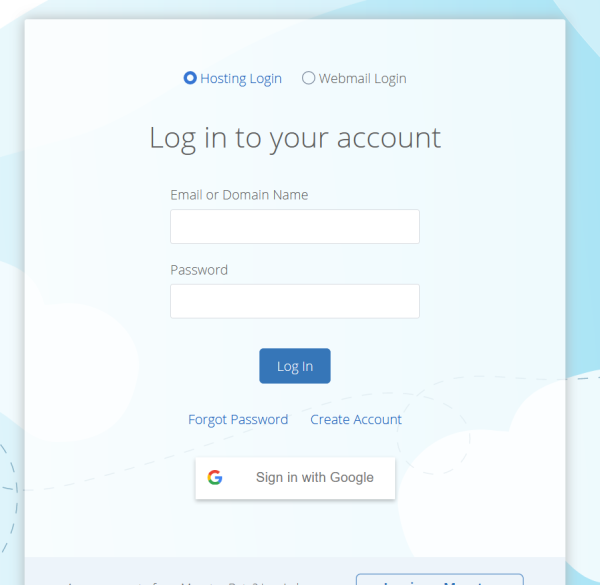
Step 1 - Log In
Log into your Bluehost account using your credentials.
Step 2 - Domains
Click the Domains tab at the top of the screen.
Step 3 - Domain Management
Scroll down to the Domain Management section. Make sure the correct domain is selected in the “Please select a domain” box at the bottom left.
Step 4 - Name Servers
In the Domain Summary box on the right, click the Name Servers tab. Select Use Custom Nameservers and enter the nameserver values for your new host. Click Save Nameserver Settings.
DNS Propagation After Changing Nameservers
After saving, nameserver changes can take anywhere from a few minutes to 48 hours to propagate fully across all global DNS servers. Most users see the change reflected within a few hours. During propagation, some visitors may still reach the old host while others see the new one - this is normal and temporary.
You can check how far propagation has spread using whatsmydns.net, which shows nameserver values as seen from DNS servers in multiple countries.
What Happens to Email When You Change Nameservers?
Changing nameservers hands full DNS control to the new host, including your MX records. If your email is hosted by Bluehost (via cPanel webmail) and you point nameservers away from Bluehost, your email will stop working as soon as the new host's nameservers go live unless you manually recreate your MX records at the new DNS provider.
Before changing nameservers, log into your current provider and export or note down your existing DNS records, especially:
- MX records (mail routing)
- SPF records (spam prevention)
- DKIM records (email authentication)
- Any CNAME or A records for subdomains you use
Recreate these records at the new host before the nameserver change propagates, or use a short DNS TTL (time to live) to minimize the gap. If you are moving only your web hosting and want to keep email on Bluehost, you should NOT change nameservers. Instead, add a new A record at Bluehost pointing to the new host's server IP, and keep MX records pointing to Bluehost's mail servers.
Changing Nameservers if Your Domain Is Registered Elsewhere
If your domain is registered with GoDaddy, Namecheap, Google Domains, or another external registrar, you cannot change the nameservers in Bluehost's dashboard. The nameserver settings live wherever the domain is registered, not where it is hosted. Log into your registrar's account instead and find the DNS or nameserver settings for the domain.
The process is similar regardless of registrar: look for a section labelled Nameservers or DNS settings, select the option to use custom nameservers, and enter the Bluehost defaults (ns1.bluehost.com and ns2.bluehost.com) or your new host's nameservers. At GoDaddy, this is under My Products > DNS. At Namecheap, it is under Advanced DNS. At Google Domains / Squarespace Domains, it is under DNS > Nameservers.
Propagation timing and the email warning above apply equally whether the change is made at Bluehost or an external registrar.
Troubleshooting Nameserver Changes on Bluehost
If your nameserver change does not seem to take effect after 48 hours, check these causes:
- Wrong domain selected: confirm you updated the correct domain in the Bluehost dashboard. If you have multiple domains, it is easy to edit the wrong one.
- Registrar lock: some domains have a transfer lock or DNS lock enabled. Disable it in the domain's security settings before making nameserver changes.
- Cache at your ISP: your local DNS cache may still show old nameserver values. Use a mobile device on cellular data or a tool like whatsmydns.net to check propagation from multiple locations worldwide.
- DNSSEC mismatch: if DNSSEC is enabled on the domain and you change to a nameserver that does not support the existing DNSSEC record, the domain may fail to resolve. Disable DNSSEC at the registrar before changing nameservers if this is a concern.
Changing Bluehost Nameservers to Cloudflare
Cloudflare is the most common destination for a Bluehost nameserver change. Cloudflare’s free CDN serves cached assets from servers close to your visitors, which reduces load times. Its DDoS protection absorbs attack traffic before it reaches your hosting server. DNS response times through Cloudflare are also faster than Bluehost’s default nameservers. The setup process takes about ten minutes and requires changes in two places: Cloudflare and your Bluehost domain settings.
Step 1: Add Your Site to Cloudflare
Sign up for a free Cloudflare account at cloudflare.com and click “Add a site.” Enter your domain and select the free plan. Cloudflare scans your existing DNS records automatically. Before moving to the next step, review the list of records Cloudflare found. Pay close attention to MX records, which control your email routing. If Cloudflare missed any records, add them manually in the DNS tab before continuing.
Step 2: Copy Your Cloudflare Nameservers
After the scan, Cloudflare assigns you two nameserver addresses specific to your account. They look something like eliza.ns.cloudflare.com and winston.ns.cloudflare.com, though the actual values will differ for your account. Copy both values exactly as shown. Cloudflare displays them on the same screen where you completed the DNS record review.
Step 3: Update Nameservers in Bluehost
Log in to Bluehost. Go to Domains, select your domain, and open the DNS or Nameservers section. Replace the existing ns1.bluehost.com and ns2.bluehost.com entries with the two Cloudflare nameserver values you copied. Save the change. Bluehost may show a warning that changing nameservers will affect your site. That is expected. Confirm and save.
Step 4: Confirm in Cloudflare
Return to the Cloudflare dashboard and click “Done, check nameservers.” Cloudflare monitors your domain and updates the status to “Active” once propagation completes. This typically takes 2 to 24 hours. Cloudflare sends a confirmation email when your domain goes active. You do not need to stay on the page.
A Note on MX Records and Email
Cloudflare imports your existing DNS records during the initial scan, including MX records for Bluehost email. You do not need to recreate them manually if the scan found them all. Verify that these records appear correctly in the Cloudflare DNS tab before clicking away from the setup screen. If they are missing, your email will stop working after cutover.
How to Verify Your Nameserver Change Worked
The most direct tool for checking propagation is whatsmydns.net. Go to the site, type in your domain, and select “NS” from the record type dropdown. The tool queries DNS servers in 20 or more countries and returns the nameserver values each one currently sees. You are looking for your new nameservers to appear across most or all locations. If you switched to Cloudflare, you should see your Cloudflare nameserver addresses replacing the old Bluehost ones.
DNS propagation does not happen everywhere at the same time. For the first few hours after a nameserver change, it is completely normal to see a mix of old and new values in the whatsmydns.net results. Some DNS servers cache records longer than others. Most locations update within 2 to 4 hours of the change, but full worldwide propagation can take up to 48 hours. Your site remains accessible throughout because the old nameservers continue to function until DNS servers drop their cached records and pick up the new values.
When whatsmydns.net shows your new nameservers in all or nearly all locations, the change is complete. If you moved to Cloudflare, the Cloudflare dashboard reflects this with an “Active” status badge next to your domain name. If you see your old Bluehost nameservers still showing after 48 hours in most locations, contact Bluehost support to confirm the change was saved correctly on their end.
Final Word: How to Change Nameservers on Bluehost
Changing nameservers on Bluehost takes only a few clicks in either the Bluerock or Legacy control panel. To return to Bluehost hosting, use the default nameservers ns1.bluehost.com and ns2.bluehost.com. For minor DNS changes that do not require handing full DNS control to another provider, editing individual A records or CNAMEs is usually simpler than a full nameserver change. Once your nameservers are pointing to Bluehost, you may also need to add individual DNS entries. See our guide on how to add an A record and CNAME on Bluehost for the step-by-step process. If you are changing nameservers because you are leaving Bluehost entirely, see our guide on how to cancel Bluehost to export your data and manage the refund before your plan ends. If you are pointing nameservers to Bluehost to add a new domain, the next step is our guide on how to assign a domain to your Bluehost account. If you are pointing your nameservers to Bluehost as part of a site move, check first whether you qualify for Bluehost’s free WordPress migration service to transfer your files and database automatically.