
Scaling a Cloudways server increases its CPU, RAM, or storage to handle more traffic, improve response times, or support a larger database. The process takes a few clicks from the Cloudways dashboard and typically completes in under a minute.
Vertical Scaling vs Horizontal Scaling on Cloudways
Cloudways supports two types of scaling:
- Vertical scaling increases the resources (CPU, RAM, storage) on your existing server. All your applications stay on the same server and benefit from the upgrade immediately. This is the standard approach for most WordPress and WooCommerce sites.
- Horizontal scaling adds additional servers and distributes traffic between them using a load balancer. This is suited for high-availability setups and enterprise applications, rather than general performance improvements. Cloudways supports horizontal scaling through their Platform Add-ons, but it requires configuring a load balancer and shared file storage -- it is significantly more complex than vertical scaling and only makes sense once vertical scaling can no longer meet the load.
For most sites, vertical scaling is the right starting point. It is simpler, takes effect in minutes, and does not require reconfiguring your applications or DNS. You can also look into other ways to make Cloudways faster for WordPress before committing to a larger server.
When to Scale Up Your Cloudways Server
Scaling increases your monthly cost, so it is worth confirming the server is the bottleneck before making the change. Signs that your current server is reaching its limits include:
- Consistently high CPU usage in the Cloudways server monitoring panel
- Slow admin dashboard load times even after clearing all caches
- Frequent PHP timeout errors or 504 Gateway Timeout responses under normal traffic
- Memory limit errors appearing in your PHP error log
- Database queries waiting for resources rather than executing slowly due to query inefficiency
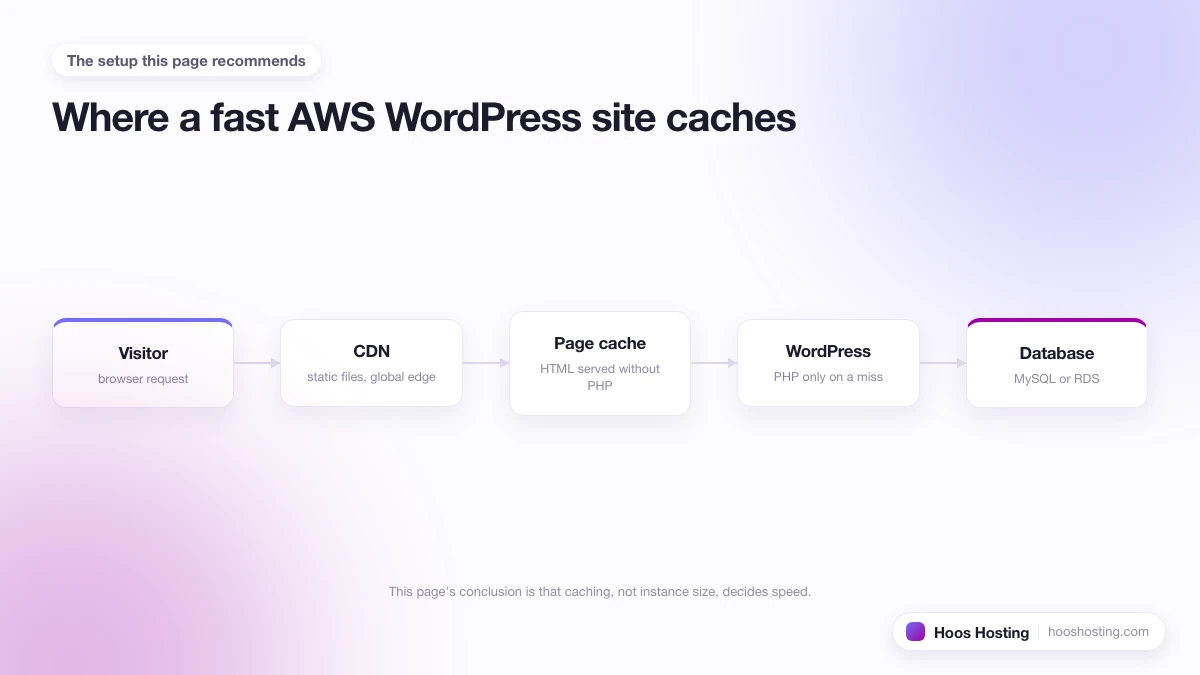
If none of these apply, caching improvements, image optimisation, and plugin cleanup often solve performance problems without needing a larger server.
Which Server Size Should You Scale To?
There is no universal answer, but here are the practical tier breakpoints most WordPress and WooCommerce sites hit:
- 1GB RAM (entry tier, ~$14/month on DigitalOcean): handles 1-3 low-traffic WordPress sites. Once PHP memory limit errors appear at normal load, it is time to move up.
- 2GB RAM (~$28/month): the most common tier for single-site WordPress shops and WooCommerce stores with moderate traffic (up to ~20k sessions/month). Handles most plugin stacks without memory pressure.
- 4GB RAM (~$48/month): the right step for a WooCommerce store running 30k+ sessions/month, a membership site, or an application with heavy database activity. Also the threshold at which adding Redis Object Cache starts paying off clearly.
- 8GB RAM and above: high-traffic stores, multi-application servers hosting 10+ sites, or applications with sustained CPU demand. At this tier, also consider whether a dedicated server or a cloud instance directly from DigitalOcean or Vultr would be more cost-effective.
A practical rule: if the Monitoring tab shows CPU averaging above 70% or RAM above 80% on a typical weekday, the next tier up is warranted. Do not scale based on peak spikes alone -- occasional traffic bursts are better handled by caching than by running a larger server 24/7.
How to Scale a Server on Cloudways
Step 1 - Back Up First
Before scaling, take an on-demand backup from the Cloudways dashboard. Go to Servers, select your server, click Backup and Restore, and take a backup. This gives you a restore point in case anything unexpected happens during the resize. See the guide on how to back up your Cloudways server for the full steps. To protect a single application before scaling, you can also take an on-demand application backup on Cloudways.
Step 2 - Open Server Management
Log into your Cloudways account, click Servers in the top navigation, and select the server you want to scale.

Step 3 - Go to Vertical Scaling
Inside Server Management, click Vertical Scaling. You will see the current server size and a slider showing the available tiers.
Step 4 - Select the New Size
Move the slider to the right to increase server resources. As you move it, the updated monthly price is displayed. Cloudways charges backup storage separately, so the final cost will be slightly higher than the slider figure.
Step 5 - Apply the Change
Click Scale Now to confirm. The resize completes in under a minute for most cloud providers. After scaling, check your application logs to confirm everything is running normally with the increased resources.
Can You Scale Down a Cloudways Server?
Whether downscaling is available depends on the cloud provider linked to your Cloudways account:
- DigitalOcean and Linode (Akamai Cloud): both support downscaling to a smaller plan through the Vertical Scaling slider. If smaller tiers appear as selectable options, you can scale down.
- AWS, Google Cloud, and Vultr: these providers generally do not support direct downscaling through the Cloudways dashboard. If the slider only moves to the right, downscaling is not available for your provider. To move to a smaller server, you would need to create a new server and migrate your applications to it.
Is There Downtime When Scaling?
Cloudways typically applies vertical scaling with only a brief interruption. The exact behaviour varies by provider:
- DigitalOcean: resize is near-instantaneous (under 30 seconds) with a brief network pause as the server reboots. Most monitoring tools will record a brief downtime event.
- Vultr and Linode: similar to DigitalOcean, with a controlled reboot cycle. Typically under a minute.
- AWS: instance type changes require a full stop-and-start cycle, which can take 3-5 minutes. The Elastic IP address is preserved, so DNS does not need to change, but visitors will see downtime during the resize window.
- Google Cloud: machine type changes require stopping the instance. The process takes 2-4 minutes on average.
For production sites where even a short outage matters, schedule the change during a low-traffic period and notify users in advance if needed.
Cloudways Autoscaling: Does Cloudways Scale Automatically?
Whether Cloudways autoscales depends on which Cloudways product you are using.
Cloudways Standard does not autoscale. On Standard plans, server sizing is entirely manual: you move the slider in Vertical Scaling, confirm, and the server resizes in under a minute. There is no setting to trigger an automatic resize when CPU or RAM hits a threshold. The Monitoring tab shows real-time resource usage and can send alerts, but it does not act on them automatically. Standard works well for sites with predictable or gradually growing traffic, where you can monitor usage and scale ahead of demand.
Cloudways Autonomous does autoscale. Autonomous is built on Cloudflare’s edge network rather than a traditional server, and resources scale automatically in response to incoming traffic. A spike from a flash sale or a viral post is absorbed without any manual action, and billing adjusts based on actual usage. The trade-off is that Autonomous does not support SSH access and some WordPress plugins that rely on server-level configuration may not work on it. For a full breakdown of Standard vs Autonomous, see the Cloudways review.
For Standard users who want the closest thing to automatic scaling: set up monitoring alerts in the Cloudways dashboard and define the thresholds at which you will scale up (typically when CPU averages above 70% or RAM above 80% on a normal weekday). With those thresholds defined in advance, the decision is already made when the alert fires and the manual resize step completes in under a minute.
Horizontal Scaling and Load Balancer Settings on Cloudways
When vertical scaling reaches its practical limit (typically 8 GB RAM and above, or when you need zero-downtime deployments across multiple servers), horizontal scaling distributes traffic across several servers using a load balancer.
To find the load balancer settings in the Cloudways dashboard:
- Log into your Cloudways account and click Servers in the top navigation.
- Select the primary server you want to use as the load balancer anchor.
- In the left sidebar, click Platform Add-ons.
- Select Load Balancer from the add-ons list.
- Configure the master server, add backend server IPs, and set the balancing algorithm (round-robin is the default).
A few important notes on Cloudways load balancer setup:
- All servers in the load-balanced pool must use the same cloud provider and ideally the same region to minimise inter-server latency.
- Shared file storage (using GlusterFS or a similar shared volume) is required if your application writes files that need to be consistent across all servers, such as uploaded media in WordPress.
- The load balancer add-on is billed separately from server costs. Check current pricing in your Cloudways account before activating.
- Horizontal scaling is not available on all Cloudways plans. Confirm it is included in your subscription before configuring backend servers.
For most WordPress sites, the load balancer is overkill. If you are reaching resource limits, vertical scaling to a 4 GB or 8 GB server and enabling Redis object caching will handle the majority of traffic growth scenarios at lower cost and complexity.
After Scaling: Check These Things
Once the scale completes, verify that the resize had the intended effect before treating the job as done:
- Check the Monitoring tab. CPU and RAM graphs should show the new capacity. If RAM still shows the old limit immediately after scaling, the resize may not have completed. Refresh the tab and wait a few minutes.
- Test the site. Load a few pages and log into the WordPress admin. Confirm page loads are responsive and there are no error messages on screen.
- Check the error log. Go to Application > Logs > Error Log. A clean log after scaling confirms no PHP errors were triggered by the resize.
- Verify caches cleared. After a server resize, Cloudways usually flushes server-level caches automatically, but run a manual cache clear from Application > Settings > Manage Services to be sure visitors see fresh content.
Scaling Costs on Cloudways
Cloudways bills hourly based on the provider and server size you choose. DigitalOcean and Vultr are typically the most affordable entry-level options. If you scale up for a traffic spike and scale back down once it passes, you only pay for the hours the larger server was active. Check current pricing directly in your Cloudways dashboard before confirming the change, as provider rates update periodically.
Final Word: Scaling a Cloudways Server
Scaling a server on Cloudways is a few-click process that typically completes in under a minute. Vertical scaling handles most performance and traffic growth needs without changing your application setup. For downscaling, check whether your provider supports it before assuming you can reverse the change. For horizontal scaling, load balancer settings are found under Servers > Platform Add-ons > Load Balancer. For a full overview of Cloudways pricing and features, see the Cloudways review. Scaling is one piece of the speed puzzle; our Cloudways performance and speed guide covers when scaling helps versus when caching changes would be more effective.